Published: 11 December 2025
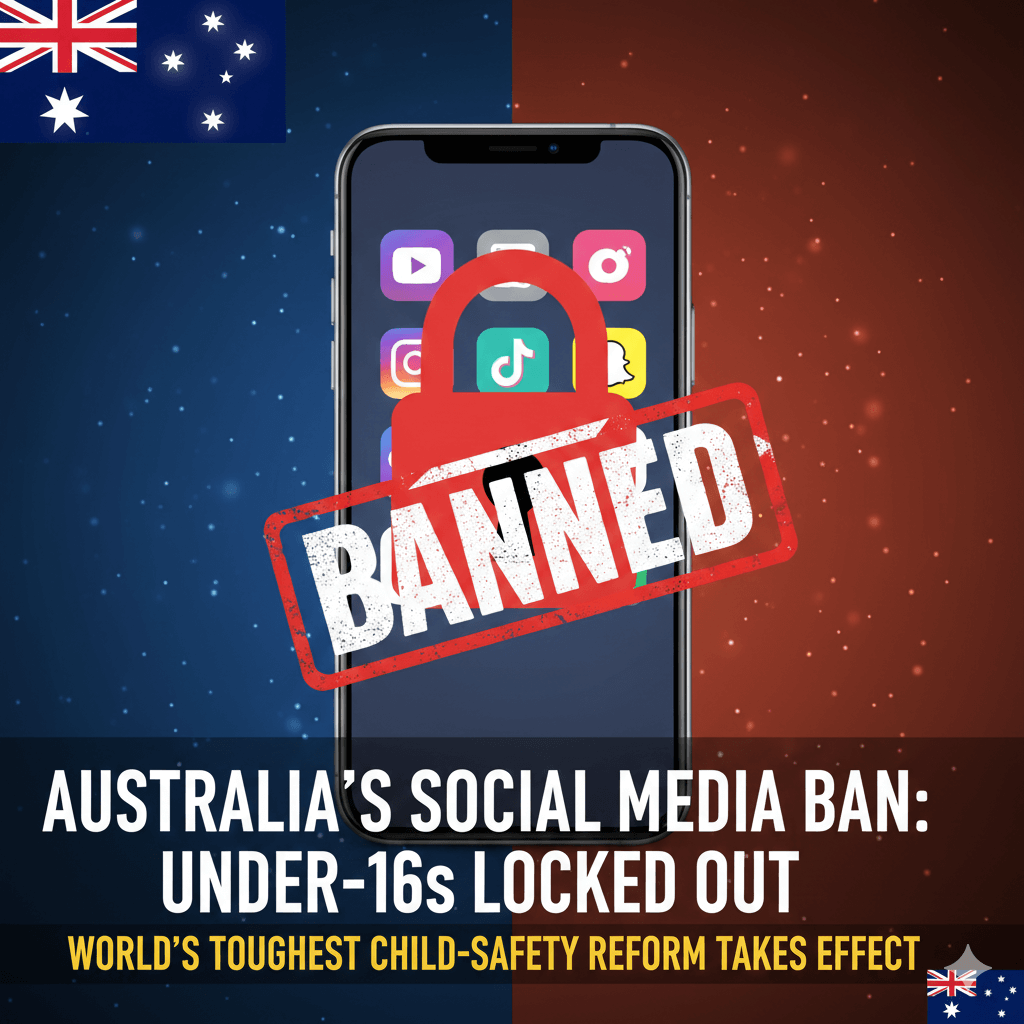
Australia has officially implemented one of the world’s strongest online safety crackdowns, enforcing a national ban preventing anyone under the age of 16 from holding an account on major social media platforms. The move marks a dramatic shift in how governments regulate children’s digital environments — and places Australia at the forefront of global tech reform.
What the New Law Does
Under the law, ten major platforms — including Facebook, Instagram, TikTok, X, YouTube, Snapchat, Reddit, Twitch, Kick and Threads — must identify, block, and remove Australian users under 16.
Platforms that fail to take “reasonable steps” can face civil penalties of up to A$49.5 million, administered by the eSafety Commissioner, Australia’s independent online-safety regulator.
Rollout and Real-World Teen Experience
From the early hours of launch day, hundreds of thousands of teens found themselves unexpectedly logged out, with messages stating their accounts had been deactivated due to the new law.
Others still accessed certain apps normally, prompting confusion about which platforms were enforcing bans immediately, and how age-verification systems operated.
TikTok, for example, confirmed it had already removed over 200,000 under-age accounts ahead of rollout — the largest known sweep so far.
Political Message and Global Signal
Prime Minister Anthony Albanese said the reform reflects a “major cultural shift”, giving power back to families and challenging big tech’s long-standing dominance over young people’s online lives.
“We are drawing a line — protecting kids’ minds, wellbeing and futures,” he said. “Australia is willing to lead where others hesitate.”
The government has pitched the reform as a model for other nations. Officials have confirmed that Denmark and Malaysia are already exploring similar frameworks, particularly in relation to algorithmic harms.
Implementation: How Platforms Must Enforce the Ban
Companies are allowed to choose the technical tools they use — but they cannot rely solely on ID documents, which raise privacy concerns. Acceptable methods include:
- Facial-age analysis prompts (non-storage models)
- Internal behavioural or metadata signals
- Cross-platform age-verification records
- User-flagged or parent-flagged accounts
Platforms must now report how many under-16 accounts they held before the ban, how many were removed, and then submit monthly reports for six months as compliance is monitored.
Monitoring the Impacts on Young People
The eSafety Commissioner confirmed a multi-year monitoring program will examine how the ban affects children’s:
- Sleep patterns
- Social relationships
- School test results
- Antidepressant use
- Screen-time habits
- Exposure to online harms
Australia enters this new era from a deeply connected baseline: 95% of 13–15-year-olds reported using social media in 2024, with YouTube, TikTok, Snapchat and Instagram being the most popular platforms.
Voices of Young People and Advocates
Supporters argue the law addresses long-standing digital harms. Among them is 12-year-old Flossie, who said:
“These apps are designed to shape our brains. Kids need space to grow without algorithms telling us who to be.”
Parents who have lost children to sextortion and cyberbullying say the law is a necessary first step, but warn that it must be paired with stronger pre-16 digital safety education in schools.
Not all young people are convinced. A group of Sydney teens interviewed for a national news segment said they view the ban as “unfair”, “overreaching”, and potentially damaging to social connection and free expression.
Criticism, Loopholes and Early Legal Pushback
Digital rights groups warn the ban could drive young people toward unregulated or dangerous corners of the internet, especially if they seek alternatives inaccessible to parents or authorities.
Privacy advocates also question facial-age-analysis tools, even in non-storage formats, pointing to broader concerns about biometric verification.
Two Australian teenagers have already filed a constitutional challenge, arguing the ban violates the implied freedom of political communication — a core legal principle used in past digital-rights cases.
Additionally, reports circulated in early December that Reddit is preparing to sue, alleging the law imposes unreasonable technical burdens and risks mass account deletions without proper oversight.
Legal analysts say the disputes could end up before the High Court, potentially reshaping the scope of federal authority over digital platforms.
A Defining Test for Global Online Safety Policy
Australia’s under-16 ban represents a bold experiment in rebalancing the relationship between children, families, governments and tech giants. Supporters hope it will reduce harm; critics fear it may drive young people further underground.
The next six months — and the data emerging from compliance reports — will determine whether this world-first policy becomes a global model or a cautionary tale.