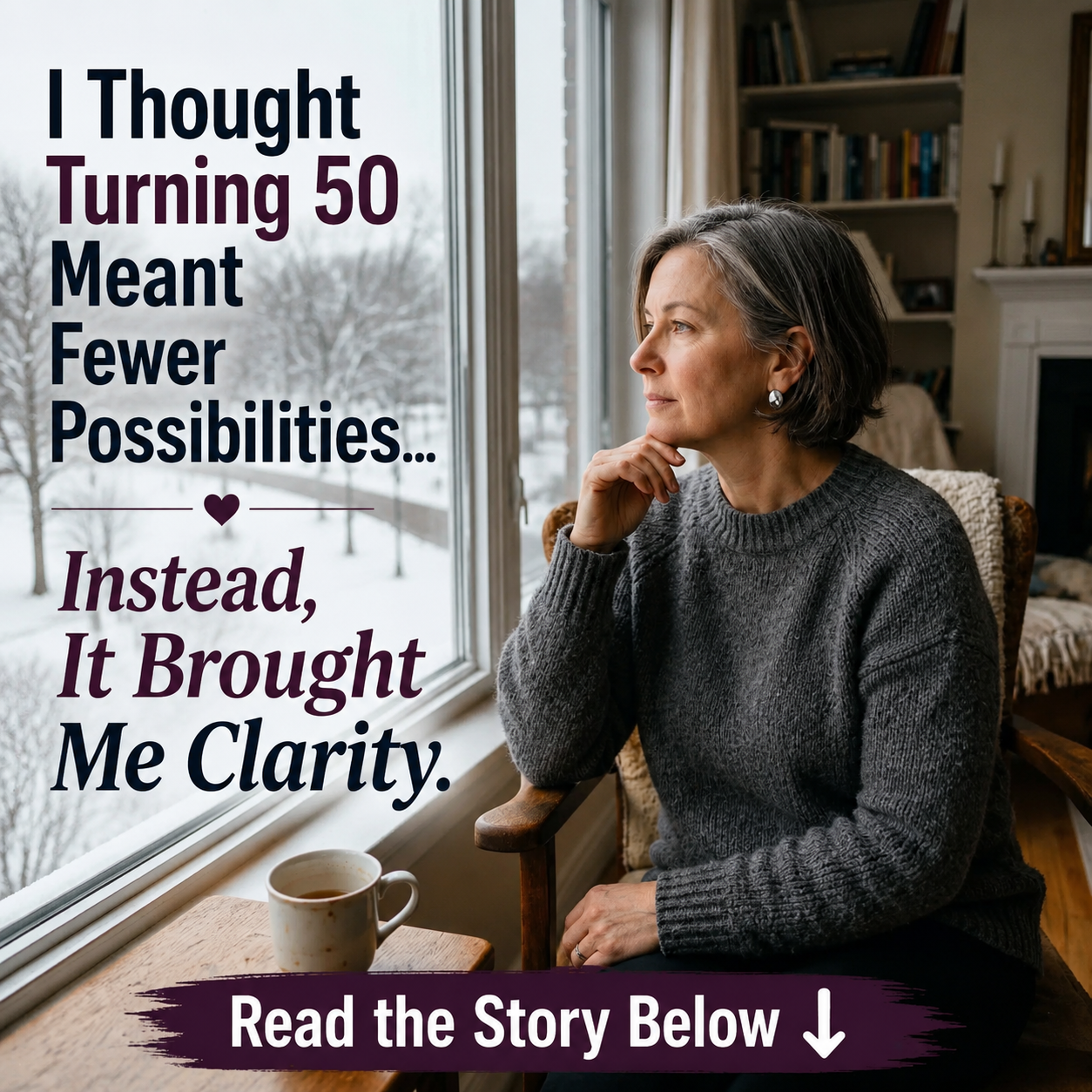
When I turned 50, I was sitting on a narrow twin bed in a Tribeca sublet, taking slow breaths and doing everything possible to hold back tears. On the surface, my situation sounded enviable. I was living in a luxury building in one of New York City’s most desirable neighborhoods. But the reality felt far less glamorous.
Nothing in the apartment belonged to me. The furniture, lamps, artwork, and even the bed were someone else’s. Rather than feeling at home, I felt like a temporary guest occupying borrowed space. The rent was affordable by Manhattan standards, but there was a catch: I could be asked to leave at almost any time if the owner needed the apartment for family or another unexpected reason. Even the kitchen was barely functional, equipped with only a small hot plate instead of a stove.
The gray winter view outside my borrowed window reflected exactly how I felt inside.
Still, there was one thing I loved about the apartment: a large window overlooking a beautiful city park. My birthday falls in February, and that year the city was buried beneath snow and bitter cold. The landscape outside was muted and gray. As I looked out, I couldn’t shake the feeling that my life lacked stability. I felt as if I were standing at the top of a slippery slope, moving toward an age society teaches us to fear from the moment we’re born.
The Job Market and the Reality of Age Bias
I had never married and wasn’t currently dating anyone. My prestigious address couldn’t disguise the truth of my circumstances. I had recently accomplished something significant: earning two degrees with straight A’s later in life, while also accumulating substantial student debt. I had followed every piece of conventional advice. Yet I still struggled to find employment.
I truly believed that returning to school and earning those credentials would open doors. In my 40s, I regularly secured interviews whenever I applied for jobs. The problem back then was simple: employers dismissed me because I didn’t have a college degree.
Years later, after obtaining the degrees, maintaining an excellent GPA, and proving my commitment, the outcome barely changed. Many employers didn’t even give me a chance to interview.
One hiring manager did speak with me briefly. What she said stayed with me.
“You wouldn’t really fit in here,” she explained. “Everyone on our team is in their twenties.”
It didn’t matter that I had spent years studying and collaborating successfully with people much younger than me. Her decision had already been made. Suddenly, I felt as though opportunities were shrinking simply because of my age.
As time passed, it became clear that society was measuring my value using standards I no longer wanted to accept.
The Silence of Online Dating
I remembered joining dating apps in my 30s. Back then, my inbox filled quickly with messages and invitations to connect.
At 50, things looked very different.
The notifications became rare, and many of the few that arrived were scams or fake accounts. As my hormones settled and life became calmer, it seemed that public interest in me had quieted as well.
Ironically, I hadn’t changed dramatically. I wore the same size clothes and still felt energetic and engaged with life. Yet I was no longer within the age range traditionally associated with starting a family. Whether or not that mattered consciously to potential partners, many still appeared drawn toward youth, excitement, and unpredictability rather than experience, confidence, and emotional ease.
A Lunch That Shifted My Thinking
A few weeks later, I met my friend Kelly for lunch. We hadn’t seen each other for quite some time, and I had missed our long conversations.
As soon as she sat down, she smiled and said, “You look exactly the same.”
Laughing, I replied, “So do you.”
“That’s because I use Botox,” she joked.
I laughed and said I might need to find some miracle treatment myself.
But as the afternoon unfolded and we talked about everything from work to relationships, I experienced an unexpected realization. Reaching 50 had given me something valuable: perspective.
Maybe my skin wasn’t quite as youthful as it once was, but my mind felt sharper than ever.
The Advantage of a Broader Perspective
I noticed that I was viewing life differently.
Sitting across from Kelly, I felt grateful for how supportive she had been when I first arrived in Manhattan years earlier. I appreciated not only our friendship but also the depth our conversations had developed over time. Whether discussing art, television, relationships, or life itself, there was now a richness to our exchanges that hadn’t existed before.
For the first time, I felt like an equal rather than the younger, less experienced person in the room.
Later that day, while walking along Fifth Avenue, I stopped in front of a shop window. Suspended inside was a graceful mobile sculpture that instantly lifted the mood of the space. I pointed out how it seemed inspired by the work of Alexander Calder.
Kelly smiled and admitted she hadn’t even noticed it because she was distracted by the beautiful designer handbags displayed nearby.
She was right, of course. But I realized something important in that moment. My attention had expanded. I was seeing more of the world around me than I once had.
The Real Problem Isn’t Aging
As the weeks passed, I continued noticing changes in how I approached life.
This wasn’t limited to appreciating art or observing details others missed. It also showed up in how I handled uncertainty. Even when student loans felt overwhelming or I worried about where I might live next, I found myself calmer, steadier, and more capable of thinking clearly.
Turning 50 didn’t diminish me.
It didn’t make me invisible.
It refined me.
I became more focused, more thoughtful, and more emotionally grounded at precisely the moment society seemed to assume my opportunities should be narrowing.
Eventually, I realized the issue was never my ability to adapt. It wasn’t a lack of ambition, curiosity, or determination. The real problem was a culture that often mistakes youth for value and experience for liability.
I hadn’t become less capable with age.
If anything, I had become more capable.
The world simply hadn’t updated its assumptions quickly enough to recognize it.
Note: This story draws inspiration from real experiences and individuals but has been adapted and fictionalized for creative purposes. Names, circumstances, and identifying details have been modified to protect privacy and enhance the narrative. Any resemblance to actual people or events is coincidental and unintentional.
All images accompanying this article are AI-generated and intended solely for illustrative purposes