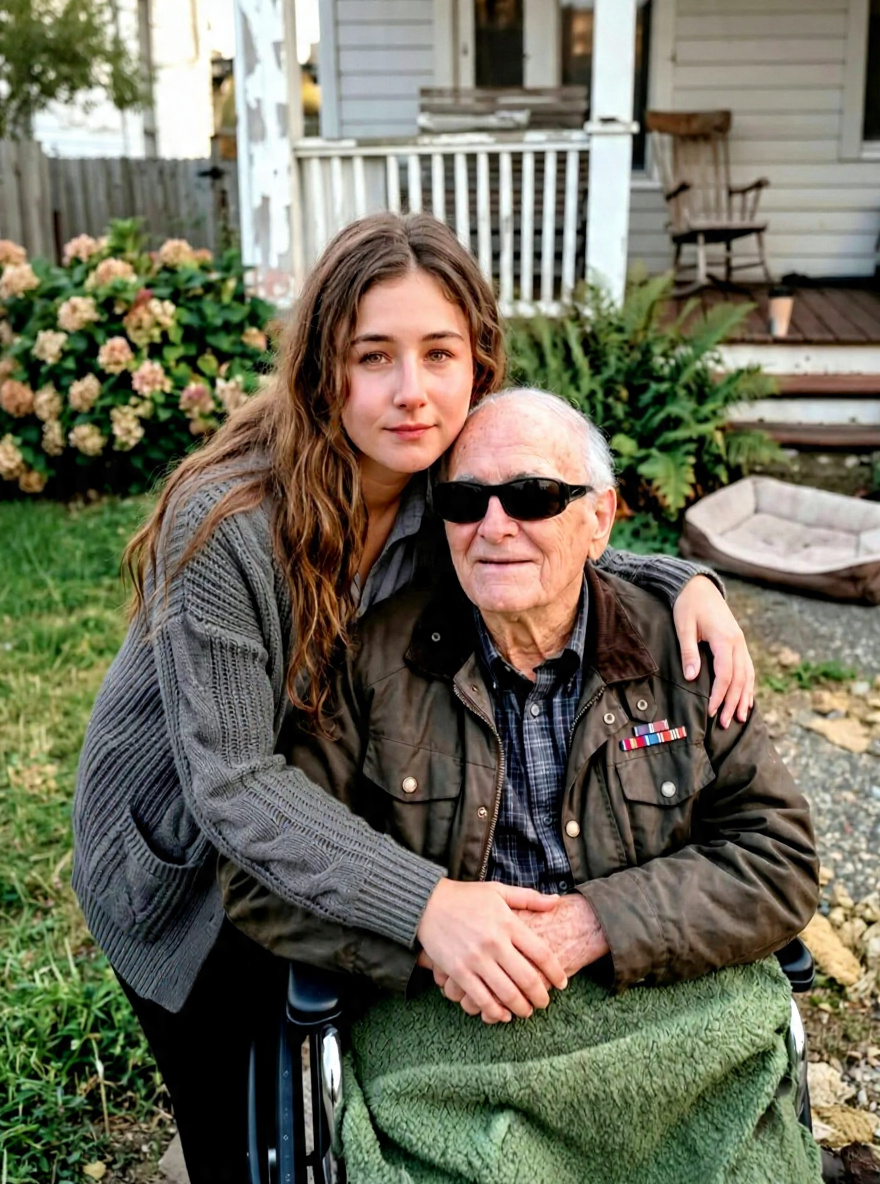
Part 1: The Job I Never Expected
At twenty-two years old, I was running on caffeine, exhaustion, and hope.
During the day, I attended college classes. At night, I worked stocking shelves at a grocery store until my feet ached. Whatever time remained belonged to my family.
Especially my younger brother, Noah.
Noah was only fourteen, but he’d spent more time in hospitals than most adults. Chronic medical complications had turned doctor appointments, surgeries, and treatments into a normal part of our lives.
My mother worked endless double shifts as a nurse’s aide to keep us afloat.
She always smiled in front of Noah.
But I saw the truth.
I saw the overdue notices hidden beneath grocery coupons.
I saw the collection calls she ignored.
I saw her sitting alone at the kitchen table after midnight with tears in her eyes when she thought everyone else was asleep.
One rainy Thursday, another hospital bill arrived.
My mother stared at it for a long time.
Then she quietly folded it and placed it beneath the growing stack.
Something inside me broke.
That night, I sat at my laptop searching for every possible side job.
Tutoring.
House cleaning.
Pet sitting.
Anything.
Then I found a listing unlike anything I’d ever seen.
Young woman wanted, age 20–25, to spend Sundays with elderly blind veteran. Excellent pay. Must be willing to act as family companion.
I frowned.
The more I read, the stranger it became.
The veteran’s granddaughter no longer visited. His family wanted someone to fill the role so he wouldn’t feel abandoned.
I almost closed the page immediately.
The whole thing felt dishonest.
Cruel, even.
Then I looked at Noah’s medical bill sitting beside my computer.
And I submitted an application.
A week later, I met Walter Harrison’s daughter, Linda.
She looked exhausted before she even sat down.
“My father lost his eyesight six years ago,” she explained. “He served in the military and spent most of his life fixing things with his hands. Losing his vision was hard on him.”
She paused.
“My daughter and he had a falling out years ago. She stopped visiting. Dad still asks about her.”
I understood more than she realized.
Loneliness leaves wounds people can’t see.
“What exactly would I be doing?” I asked.
“Just spend Sundays with him. Have lunch. Listen to his stories. Keep him company.”
“And pretend to be his granddaughter?”
Linda looked away.
“Yes.”
The word hung between us.
I hated it.
But I thought about Noah.
I thought about my mother.
And I accepted.
The first Sunday I drove to Walter’s house, I nearly turned around twice.
The small white home sat beneath towering oak trees, surrounded by flower beds that looked lovingly maintained.
Before I could knock a second time, the door opened.
An elderly man stood there.
Though his eyes could no longer see, his smile immediately found me.
“There you are.”
My chest tightened.
“Hi, Grandpa.”
The word felt stolen.
Like something I hadn’t earned.
But Walter simply reached out and squeezed my hand.
“Come inside.”
For the next four hours, he talked.
About military service.
Fishing trips.
Long road trips with his wife.
His years repairing trucks.
The adventures he’d had before age slowed him down.
But whenever he mentioned his wife Margaret, everything changed.
His voice softened.
His smile deepened.
“Margaret could make me laugh when nobody else could.”
For a moment, I forgot I was pretending.
And that frightened me.
Part 2: When the Lie Became Real
The Sunday visits continued.
One week became three.
Three became six.
Six became months.
And somewhere along the way, Walter stopped feeling like a job.
He became family.
He remembered everything.
My exams.
My favorite books.
My worries.
My mother’s exhausting schedule.
Noah’s treatments.
One afternoon he asked quietly, “How’s your brother doing?”
I paused.
Not because I didn’t know the answer.
Because I’d forgotten I wasn’t supposed to tell him personal things.
Somehow, I had.
All of them.
“He had another procedure this week,” I admitted.
Walter nodded.
Then he squeezed my hand.
“He’s lucky to have you.”
The words nearly shattered me.
Nobody had said that in a very long time.
As time passed, I began visiting even when I wasn’t being paid.
I’d bring cookies.
Sometimes coffee.
Sometimes absolutely nothing.
We’d sit on the porch listening to birds in the trees.
Talking.
Laughing.
Or simply enjoying the silence.
The arrangement had started as a performance.
But eventually neither of us seemed to be acting anymore.
He wasn’t replacing a grandfather I had lost.
I wasn’t replacing a granddaughter who had left.
Yet somehow, we became something equally real.
Then everything changed.
One Sunday, Walter sounded tired.
The next week he sounded weaker.
Then came the hospital visits.
The wheelchairs.
The oxygen tanks.
The long pauses between sentences.
One afternoon while I adjusted his blanket, he reached for my hand.
“You know something?” he asked.
“What?”
“You made my last years better.”
My eyes instantly filled with tears.
“No, Walter.”
My voice cracked.
“You made mine better.”
He smiled.
Neither of us needed to say anything else.
Three weeks later, Linda called.
The second I heard her voice, I knew.
“Emily…”
Silence.
Then:
“Dad passed away this morning.”
The room spun.
I sat on the edge of my bed and cried until I couldn’t cry anymore.
Not because I’d lost a paycheck.
Not because I’d lost a client.
Because I’d lost my grandfather.
Even if we hadn’t shared blood.
The funeral drew veterans, neighbors, friends, and family.
Story after story painted the same picture.
A man who had served his country.
A man who loved fiercely.
A man who never stopped caring about people.
I sat quietly in the back.
Listening.
Remembering.
Missing him.
After the service, Linda hugged me tightly.
“Dad loved you,” she whispered.
I couldn’t answer.
My throat wouldn’t allow it.
A week later, my phone rang.
“Miss Emily Carter?”
“Yes?”
“My name is James Whitaker. I’m the attorney handling Walter Harrison’s estate.”
I frowned.
“There must be some mistake.”
“There isn’t.”
A pause.
“Mr. Harrison specifically requested your presence.”
My stomach dropped.
Part 3: The Truth Walter Took to His Grave
The lawyer’s office was packed.
Family members filled nearly every chair.
Several recognized me instantly.
Whispers spread across the room.
“That’s her.”
“The fake granddaughter.”
I wanted to disappear.
Instead, I sat quietly.
Attorney Whitaker opened a folder.
Then he began reading.
“To my family,
Many of you may be surprised to see Emily here today.
What may surprise you even more is this:
I knew the truth from the very beginning.”
Gasps echoed throughout the room.
My heart stopped.
The lawyer continued.
“The first day Emily walked through my front door, I knew she wasn’t my biological granddaughter.
Blindness does not make a person unaware.
I heard a different voice.
Different footsteps.
Different habits.
I knew.”
Tears instantly filled my eyes.
All those Sundays.
All those months.
He knew.
Every single moment.
“At first, I allowed the arrangement because I was lonely.
But after a few weeks, something changed.
Emily stopped pretending.
She became herself.
And the person she truly was brought kindness, patience, and joy into my life.”
Nobody moved.
Nobody spoke.
Even the relatives who had mocked me looked ashamed.
“Many people share my blood.
Very few shared their time.
Emily did.
That difference matters.”
The room was silent except for quiet sobbing.
Then came the final surprise.
“Therefore, I direct that a portion of my estate be placed into a trust dedicated to Noah Carter’s medical care and future education.
No child should suffer because his family lacks resources.
This fund shall be called The Second Chance Trust.”
Attorney Whitaker lowered the page.
Then looked directly at me.
“The trust contains two hundred thousand dollars.”
I broke down.
Completely.
Years of fear.
Years of stress.
Years of watching my mother struggle.
Gone.
For the first time in forever, there was hope.
But Walter wasn’t finished.
The lawyer handed me a final envelope.
My hands trembled as I opened it.
Inside was one last letter.
Emily,
If you’re reading this, then I’m probably somewhere telling old stories and driving the angels crazy.
Thank you for every Sunday.
Thank you for every conversation.
Thank you for making an old blind man feel seen.
Family isn’t always the people we’re born to.
Sometimes it’s the people who choose to stay.
You chose to stay.
And because of that, you became my granddaughter in every way that truly matters.
Love,
Grandpa Walter
Three years have passed since that day.
Noah is healthy.
My mother finally works normal hours.
I graduated from college.
Life is good.
Every Sunday, I still drive to Walter’s little white house.
Linda owns it now, but she always leaves the porch open.
I sit in Walter’s favorite rocking chair and tell him about my week.
About Noah.
About life.
Sometimes the wind moves through the trees in a way that reminds me of his voice.
And I can almost hear him asking the question he always asked.
“How’s your brother doing?”
I smile every time.
Then I answer exactly the way he would have wanted.
“He’s doing great, Grandpa.”
And somehow, I think he already knows.