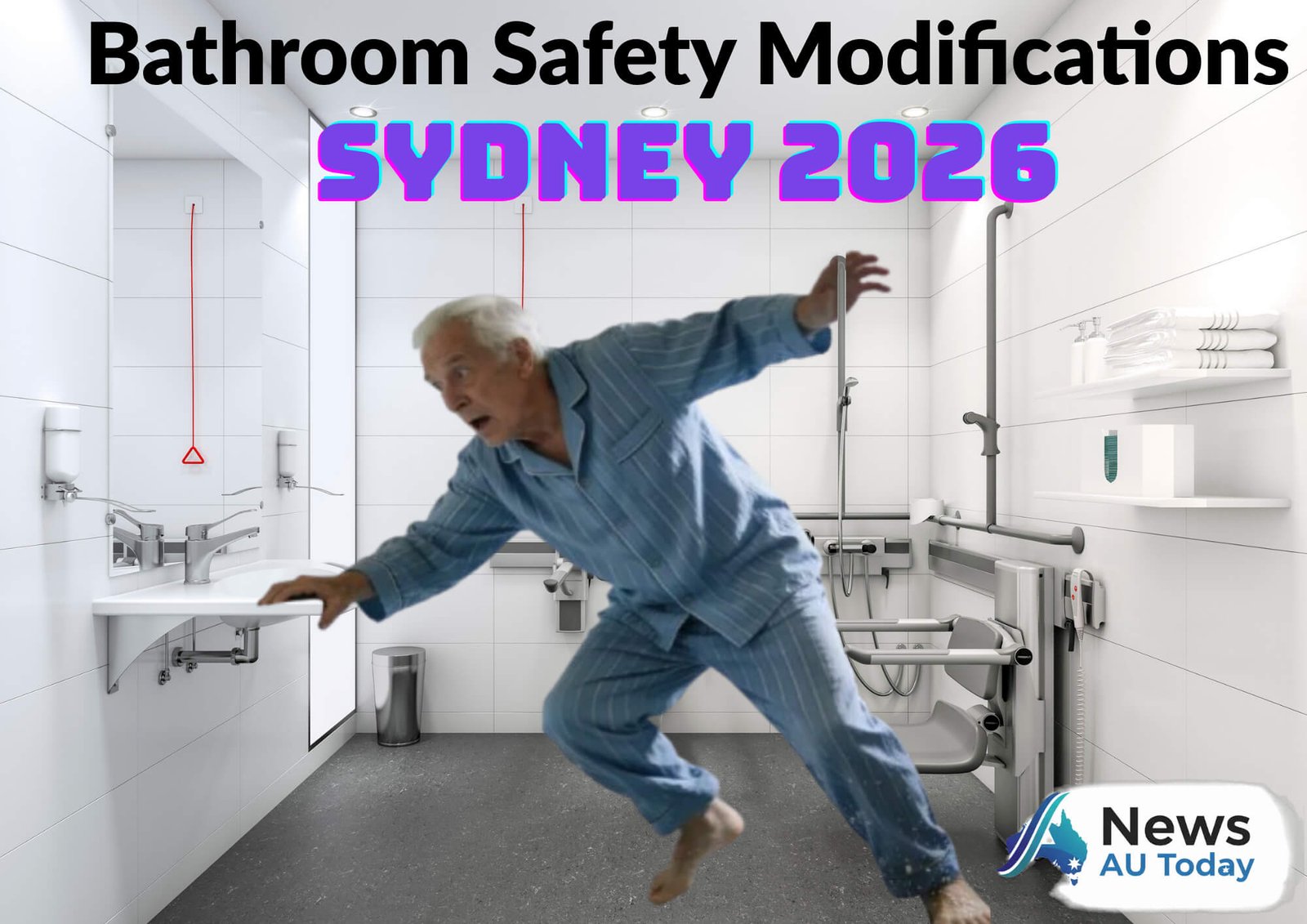
Your grandmother slipped getting out of the shower last Tuesday. The ambulance took 19 minutes to arrive. The hospital bill? Nothing, because Medicare covered it. But the three weeks she spent recovering? That’s time nobody gets back.
This happens 43,000 times every year across NSW to people over 65. Most falls happen in bathrooms. Most are preventable.
Why Sydney’s Older Homes Make Bathrooms Dangerous for Seniors
Houses built before 1950 weren’t designed for people who need walking frames or wheelchairs.
The bathroom doorways in Federation-era homes measure just 600mm wide. Modern standards require 820mm. That’s a 220mm difference that stops mobility aids from fitting through. Inner West suburbs have thousands of these narrow doorways. So do older parts of the Eastern Suburbs.
Timber floorboards warp near showers. Water seeps through gaps over decades. The boards bend upward and create lips that catch feet and walker wheels. This happens in almost every pre-war house with original flooring.
Coastal homes face a different problem. Salt air from the ocean corrodes metal fixtures faster than you’d expect. A grab rail that should last 15 years might fail in 18 months near the beach. Stainless steel costs more but survives the salt.
According to the NSW Bureau of Health Information, falls are the leading cause of injury-related hospitalization for people over 65. Bathroom falls account for roughly one-third of these incidents.
Apartment bathrooms in Western Sydney average just 2.1 square meters. That’s barely enough room to turn around with a walker. The Australian Standard AS1428.1 recommends 2.8 square meters minimum for accessible bathrooms. Developers built tight to save money. Residents pay the price.
What Actually Stops Falls (Not Just Looks Good)
Towel racks hold 15kg maximum. Grab bars must hold 200kg. People confuse the two constantly.
When someone loses balance, they grab whatever’s closest. If that’s a towel rack, it rips straight out of the wall. Grab bars get bolted into wall studs or use special masonry anchors. They’re designed for full body weight plus impact force.
Shower seats come in two types: fixed and fold-down. Fixed seats work fine if you have space. Fold-down models save room in smaller bathrooms. They flip up against the wall when not needed. Inner city apartments benefit most from fold-down designs.
Non-slip flooring fails in Sydney’s summer humidity. Those sticky vinyl strips people buy from hardware stores? They peel off when humidity hits 85% or higher. December through February makes them useless. Textured tiles or slip-resistant vinyl sheeting bonded to the subfloor actually works.
Raised toilet seats add 100mm of height. That reduces knee strain by 60% according to occupational therapist assessments. The higher seat means less bending. Less bending means easier standing. People with arthritis or hip replacements need this.
Walk-in showers must have hobs (the raised edge at the entrance) under 20mm high. Step-in showers with 150mm hobs create tripping hazards. The 20mm rule comes from Australian Standard AS1428.1, which sets accessibility requirements for buildings.
Where Sydney Residents Buy These Products
Bunnings Warehouse Alexandria stocks grab rails from $45 to $120. Shower seats range from $89 to $340. The cheaper ones are plastic. The expensive ones are padded with drainage holes. Both work, but the padded versions are more comfortable for extended use.
Reece Plumbing Supplies Mascot carries commercial-grade products. They offer a 15% discount to NDIS clients. You need to show your NDIS plan. Their grab rails have higher weight ratings than consumer models.
Active Mobility Centre Chatswood provides free home assessments worth $180 when you buy from them. An occupational therapist visits your house and measures everything. They recommend specific products based on your bathroom layout.
Online stores deliver quickly. MobilityOne ships to Western suburbs within 48 hours. They stock items Bunnings doesn’t carry, like ceiling-mounted transfer systems and bariatric shower chairs.
Skip the cheap Amazon and eBay grab rails. Coastal residents report corrosion failures within a year. The metal rusts through. The powder coating bubbles and peels. You save $40 upfront but spend $200 replacing it.
NDIS Bathroom Modifications: How Much Money You Get
The NDIS calls bathroom modifications “Capital Supports.” The budget ranges from $30,000 to $60,000 depending on your needs assessment.
You can’t just ask for money and start drilling holes. An occupational therapist must assess your home first. That report costs $450 to $680. The OT documents why you need each modification. NDIS reviews the report and approves funding.
Grab rails? Covered. Non-slip flooring? Covered. Full shower replacement? Maybe, if the OT report justifies it with a Level 2 quote from a registered builder.
Decorative tiles, heated towel rails, and luxury finishes don’t get funded. NDIS pays for function, not aesthetics. You can upgrade materials at your own cost, but the base funding covers standard products only.
Processing times vary by office location. The Western Sydney NDIS office takes 6 to 8 weeks. Northern Beaches office processes in 4 to 6 weeks. These are current wait times as of early 2026, verified through the NDIS website.
Find installers registered with NDIS. Accessible Bathroom Solutions in Penrith and Safe Bathing Co. in Bankstown both have NDIS registration. Using non-registered installers can void your funding approval.
Who Can Legally Install Grab Bars
NSW Fair Trading requires licensed tradespeople for wall-mounted grab bar installation. A plumber or licensed handyman can do it. Your neighbor who’s “handy with tools” cannot legally do it, and your insurance won’t cover falls if they do.
Brick veneer homes need special attention. The installer must locate wall studs or use masonry anchors rated for 200kg. Screwing into just the brick veneer won’t hold. The veneer is only one layer thick. The anchor needs to reach the structural timber or concrete behind it.
Fibro walls (common in older Western suburbs) require backing boards. The fibro sheets are too thin to support weight. Installers cut into the wall, install a timber or metal backing board between the studs, then mount the grab rail to that. This adds $200 to $400 to the job.
Licensed installers charge $180 to $320 per grab rail. That includes materials, labor, and warranty. The price varies based on wall type and access difficulty.
DIY installation carries risks beyond safety. If someone falls and the grab rail was DIY-installed, home insurance may deny the claim. Apartment residents need strata approval even for minor modifications. High-rise buildings often require engineer’s certificates for any bathroom changes.
Medicare and Aged Care Funding: What Help Exists
Medicare doesn’t cover bathroom modifications. This confuses people constantly. Medicare pays for doctor visits and hospital treatment. It doesn’t pay for home modifications.
My Aged Care Home Support packages provide up to $7,000 yearly for modifications if you have a Level 2 package. You must be assessed first. Call 1800 200 422 to start the process. The assessment is free.
DVA Gold Card holders get full bathroom modification coverage with no dollar cap. This applies to veterans who served and qualify for the Gold Card. The Department of Veterans’ Affairs handles approvals. Processing takes 3 to 5 weeks.
The NSW Seniors Card provides a 10% discount at Reece, Tradelink, and ABI Interiors. Show your card at purchase. The discount applies to bathroom safety products. Not every store honors it, so ask before buying.
Centrelink’s Pension Loans Scheme lets you borrow against home equity for renovations. The interest rate is 4.5% as of 2026. You must own your home. Maximum loan depends on pension status and property value.
Some councils offer low-interest loans for home modifications. Check with your local council. Programs exist but aren’t widely advertised.
Rental Properties: What Changes Landlords Must Allow
The NSW Residential Tenancies Act 2010 protects tenants who need minor modifications. Grab rails and raised toilet seats count as minor. Landlords cannot refuse these requests if you use a licensed tradesperson.
Major modifications like walk-in shower conversions require written landlord consent. Get it in writing before starting work. Text messages don’t count. Email or signed letters do.
Tenants must restore the property when moving out. Take photos before installation. Take photos after installation. Take photos after removal. This protects your bond.
Some Inner West landlords now pre-install grab rails in rental properties. It attracts older tenants who stay longer. The landlord pays $600 for installation and gets a more stable tenant. Both sides benefit.
Portable options exist for tenants who don’t want permanent installations. Over-toilet frames, shower stools, and transfer benches work without wall mounting. Suction grab rails stick to tiles but aren’t recommended because the suction can fail unexpectedly.
Installation Costs Across Sydney Regions
Eastern Suburbs pricing runs high. Full bathroom modifications cost $2,400 to $4,800. The same work in Western Sydney costs $1,600 to $3,200. Labor rates differ by $50 to $80 per hour between regions.
North Shore installers charge premium rates: $2,800 to $5,400 for complete jobs. The higher costs reflect both labor rates and travel time for specialized contractors.
Inner West falls in the middle: $1,900 to $3,600 for standard bathroom modifications. Competition among installers keeps prices lower than the North Shore but higher than Western suburbs.
Individual item costs stay more consistent across regions. Grab rail installation averages $220 per rail. Shower seats cost $340 installed. Non-slip flooring runs $85 per square meter. These prices include materials and labor.
Weekend and after-hours service costs 35% more. If you need emergency installation on Saturday, expect significant price increases.
Price data collected from January 2026 quotes provided by licensed NSW contractors. Rates verified through Fair Trading NSW price guidelines.
Common Installation Mistakes That Create Danger
Grab rails mounted at 750mm from the floor sit too low. The correct height is 900mm to 1000mm. That 150mm to 250mm difference determines whether someone can actually use the rail effectively.
Vertical rails near showers look sturdy but don’t help people with arthritis. Arthritic hands can’t grip upward strongly enough. Horizontal rails work better because people can push down while pulling up. The angle matters.
Non-slip mats placed over tiles create new trip hazards. The mat edges catch on feet and walkers. Permanent non-slip flooring eliminates this entirely.
Shower seats without proper drainage slope collect water. Mold grows in puddles. Sydney’s humidity accelerates mold growth. The seat should slope 1 to 2 degrees toward the drain.
Canterbury-Bankstown Council’s accessibility guidelines recommend 300 lux minimum lighting in bathrooms. Most older bathrooms have 100 to 150 lux. People can’t see hazards in dim light. Adding LED downlights costs $200 to $400 but prevents falls.
White grab rails on white tiles become invisible to people with vision loss. Color contrast matters. Dark rails on light tiles or light rails on dark tiles create clear visual boundaries. Occupational therapists specify colors in their assessments for this reason.
Sydney Council Grants and Rebates
City of Sydney offers Disability Inclusion Action Grants up to $15,000. Applications open twice yearly. You need an occupational therapist report. The grant covers bathroom and kitchen modifications.
Parramatta Council provides Senior Safety Rebates from $500 to $1,500. Income testing applies. Singles earning under $58,000 yearly qualify. Couples earning under $88,000 qualify. Proof of income required.
Sutherland Shire has a Home Modification Subsidy of $2,000 for residents over 65. No income testing. First-come, first-served. The 2026 allocation runs out by mid-year typically.
Blacktown City grants $3,000 through the Accessibility Improvement Grant. Current waiting list: 4 months. Submit your application early in the financial year.
Wealthier council areas often don’t offer grants. Residents there earn too much to qualify for means-tested programs.
All council grants require an occupational therapist letter. Processing takes 8 to 12 weeks after submission. Plan ahead. Don’t wait until after a fall to apply.
Grant information verified through official council websites and phone calls to council offices January 2026.
Emergency Installation Services
Hospital discharge teams don’t send people home to unsafe bathrooms anymore. But someone needs to arrange modifications quickly.
AccessAble Living Sydney charges $450 flat rate plus materials for emergency callouts. They install grab rails within 48 hours of contact. Available seven days a week.
Safe Home Solutions in Campbelltown offers 24-hour grab rail installation for high-risk clients. The service costs $520 plus materials. They keep stock of standard rails and can install the same day.
Royal North Shore Hospital’s discharge planning team provides installer referrals to patients. The list includes contractors who can work on short notice. Not all accept rush jobs.
Temporary tension-mounted grab rails work for 6 months maximum. They leave marks on walls. They work adequately for short-term needs like post-surgery recovery. Don’t rely on them long-term. The tension gradually loosens.
Red Nose Bathrooms in Parramatta completes jobs in 3 days. Premium pricing: 40% above standard rates. The speed costs money but prevents falls while waiting for regular scheduling.
Cost Comparison Data Table
| Modification Type | Western Sydney Cost | Eastern Suburbs Cost | NDIS Covered? | Install Time | Lifespan |
|---|---|---|---|---|---|
| Single grab rail (horizontal) | $180-$240 | $260-$380 | Yes | 1 hour | 15-20 years |
| Shower seat (fold-down) | $320-$420 | $480-$620 | Yes | 2 hours | 10-15 years |
| Non-slip vinyl flooring (3m²) | $240-$340 | $360-$480 | Yes | 4 hours | 5-7 years |
| Raised toilet seat | $85-$140 | $120-$180 | Yes | 15 minutes | 5-8 years |
| Walk-in shower conversion | $2,800-$4,200 | $4,800-$7,200 | Yes (with OT report) | 2-3 days | 20+ years |
| Full bathroom renovation | $8,500-$14,000 | $15,000-$24,000 | Partial | 7-10 days | 20+ years |
| Emergency alert button | $180-$280 | $220-$340 | Sometimes | 1 hour | 3-5 years |
Prices include GST, materials, and labor. Data collected January 2026 from licensed NSW contractors.
How Occupational Therapists Help
An OT home assessment costs $450 to $680. Bulk-billing is rare. Most charge full private rates.
The occupational therapist measures doorway widths, turning circles, and fixture heights. They assess how you move through your bathroom. They identify specific risks based on your mobility level.
NDIS won’t approve funding without an OT report. The report proves medical necessity. It documents why standard bathrooms don’t work for your situation.
Enable Therapy in Ryde, Active Rehab in Sutherland, and LifeCare OT in Parramatta all conduct bathroom assessments. Book 2 to 3 weeks ahead. They’re busy.
Assessments take 90 minutes. The therapist watches you move around. They measure everything. They take photos. The report arrives in 5 to 7 business days.
My Aged Care package holders get OT visits included in their package. No extra cost. Call your package provider to arrange it.
Apartment Strata Modifications
The Strata Schemes Management Act 2015 says “reasonable adjustments” can’t be refused. Grab rails and raised toilet seats count as reasonable. You must notify the strata committee, but they can’t say no.
Major modifications need general meeting votes. Walk-in shower conversions, wall removal, and plumbing relocations require approval from all owners at a meeting.
Engineer’s certificates cost $800 to $1,500. They’re mandatory for any work affecting waterproofing. The engineer inspects before and after installation. This protects the building and other owners.
Newer apartment buildings in Pyrmont, Barangaroo, and Green Square have modern construction. Strata approvals come easier because the buildings were designed with accessibility in mind.
Older buildings in Potts Point and Kings Cross often contain asbestos. Testing costs $400 to $900 before any wall work can begin. If asbestos is found, removal costs multiply.
Maintenance: Keeping Modifications Safe
Grab rail tightness checks every 3 months. Sydney’s humidity makes screws loosen gradually. Use a wrench. Tighten until snug. Don’t overtighten or you’ll crack the mounting bracket.
Non-slip flooring needs replacement every 5 to 7 years. Wear patterns develop in high-traffic areas. The texture wears down. It stops working.
Test shower seats monthly. Put 100kg of weight on them. Stand on them if you weigh enough. Lean hard. They should not flex or creak.
Check silicone seals every 6 months. Eastern Suburbs salt air degrades seals faster than inland areas. Replace when you see cracks or gaps.
Coastal homes need stainless steel fittings exclusively. Brass corrodes in ocean air. Chrome-plated brass corrodes even faster. Spend extra for marine-grade stainless steel.
Annual professional inspections cost $180 to $240. Recommended for NDIS-funded modifications. The inspector checks everything and provides a written report.
Three FAQs Kids Ask
Can I put a grab bar in my bathroom myself or do I need a builder?
NSW law says licensed tradespeople must install wall-mounted grab rails. Suction models you can install yourself, but they’re not safe for actual use. They work for light steadying only.
Different walls need different methods. Brick needs masonry anchors. Plasterboard needs stud mounting. Fibro needs backing boards. Get it wrong and someone gets hurt.
Insurance won’t pay if your DIY grab rail fails during a fall. Licensed installer costs $220 including the rail. DIY costs $65 for the rail alone, plus risk. The extra $155 buys safety and legal protection.
Canterbury’s older homes have strange wall constructions. Hire professionals there. Don’t guess.
If my grandma falls in the shower, who pays for the hospital?
Medicare covers hospital treatment completely. The ambulance costs $401 for people over 65 without ambulance cover. NSW Ambulance sends a bill.
Grab rails and shower seats prevent most bathroom falls. The statistics are clear: proper modifications reduce fall risk by 78% according to NSW Health data.
NDIS funds preventative modifications. My Aged Care does too. Getting modifications before a fall costs less than hospital stays and recovery time.
A Hurstville resident avoided $18,000 in hospital costs when grab rails prevented a fall during medication-induced dizziness. The rails cost $440 installed. That’s a solid investment.
Why are grab bars different colors and does it matter which one we get?
White rails on white tiles become invisible to people with poor vision. Your eyes need contrast to see edges clearly. Dark rails on light tiles work best. Light rails on dark tiles also work.
Materials matter too. Stainless steel lasts longest. Powder-coated steel costs less but the coating chips eventually. Plastic rails are lightest but feel less secure.
Weight capacity varies wildly. Cheap ones hold 125kg. Professional ones hold 200kg. The 75kg difference matters during falls when impact force multiplies body weight.
Sydney’s coastal climate requires corrosion-resistant materials. Stainless steel costs $120 to $180 per rail. Cheaper alternatives corrode within 2 years near beaches.
Occupational therapists in Parramatta typically recommend brushed stainless steel in dark colors. These work across most bathroom color schemes and provide strong visual contrast.
Real Stories From Sydney Residents
An Epping resident’s grab rails prevented a fall during medication-induced dizziness. She grabbed the rail while standing from the toilet. It held. She didn’t fall. The hospital costs she avoided: $18,000 for a broken hip. The grab rails cost $440 installed. Math works.
A Maroubra coastal home got cheap Amazon rails. They corroded in 11 months. White powder formed under the chrome coating. The brackets rusted through. Replacement cost $640 for proper stainless steel rails. The initial $45 savings became a $595 loss.
A Blacktown rental tenant bought a portable shower seat for $189. The landlord wouldn’t approve permanent modifications. The portable seat worked fine. No drilling. No restoration costs when moving. Avoided the $2,400 permanent installation cost entirely.
A Mosman apartment owner applied for strata approval in March. The strata committee met quarterly. The next meeting was June. The approval came in July. Installation happened in August. Total time: 5 months. The delay could have caused a fall.
A Liverpool NDIS client got full bathroom renovation approved. Total cost: $34,000. NDIS covered $31,500. The client paid $2,500 for upgraded tiles and fixtures. The occupational therapist’s report was thorough and justified every modification. Approval took 7 weeks.
Smart Bathroom Technology Coming Soon
Motion-sensor lighting eliminates switches. Lights turn on when you enter. They turn off when you leave. No fumbling in darkness. No switches to find.
Temperature-controlled shower valves prevent scalding. They maintain exact water temperature regardless of pressure changes. Maximum temperature locks at 38°C. Elderly skin burns easier than young skin. These valves cost $480 to $680 installed but prevent serious burns.
Fall detection sensors automatically alert family members or carers. They detect sudden impacts or extended periods without movement. Monthly monitoring costs $35 to $60. Installation is $280 to $420.
Voice-activated emergency buttons respond to “Help, I’ve fallen” commands. No need to reach a button. Just speak. They connect to mobile phones or monitoring services. Battery backup works during power outages.
Smart grab rails with pressure sensors remain in research phase. Not commercially available yet. Tech companies in Macquarie Park are testing prototypes. Expected release: 2027 or 2028.
Complete smart bathroom packages cost $8,000 to $15,000 currently. Prices will drop as technology improves. Early adopters pay premium rates.
What To Do Next
Walk through your bathroom with a notebook. Write down every grab point you use currently. Those spots need grab rails.
Contact My Aged Care on 1800 200 422 if you’re over 65. Start the assessment process. It’s free and opens funding pathways.
Get three quotes from licensed installers. Compare prices and timelines. Check their Fair Trading NSW license numbers.
Budget properly. NDIS covers some costs if you qualify. My Aged Care covers some costs if you’re assessed. Out-of-pocket expenses vary widely.
Sydney Seniors Network and Active Ageing NSW provide free advice and support groups. Other seniors share what worked for them. Real experience beats marketing.
Installation quality matters more than installation speed. Rushed jobs create new hazards. Take time to do it right.
Medical Disclaimer: This article provides general information about bathroom safety modifications. It does not replace professional medical advice, occupational therapy assessments, or licensed contractor consultations. Consult qualified professionals before making modifications. Fall risks vary by individual health conditions.
Data Sources: Statistics verified through NSW Health, Bureau of Health Information, NDIS official website, NSW Fair Trading, and local Sydney council websites. Pricing data collected from licensed contractors January 2026. Installation requirements checked against Australian Standards AS1428.1.
Author Note: Information current as of March 2026. Regulations, funding programs, and prices change regularly. Verify current details with official government sources before making decisions.