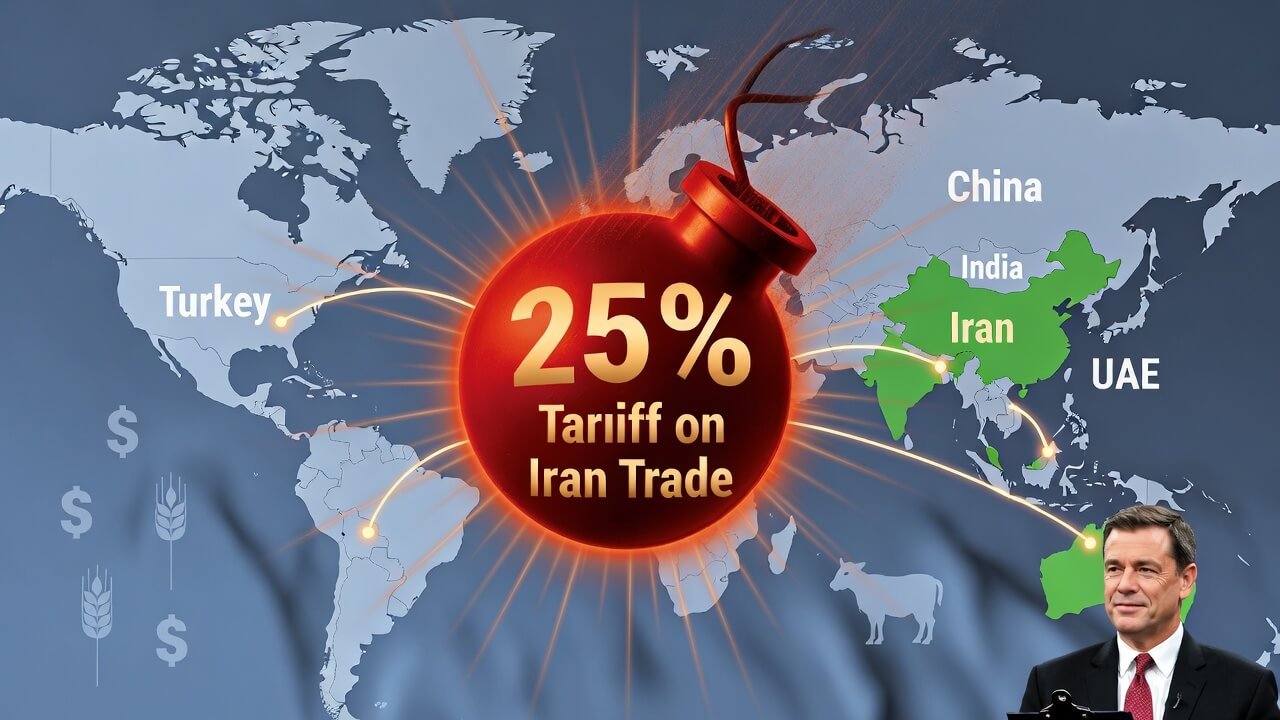
US President Donald Trump has dropped a bombshell on global trade, announcing an immediate 25% tariff on any country doing business with Iran – a direct jab at Tehran’s brutal crackdown on massive anti-government protests that have left hundreds dead.
Announced on Truth Social on 12 January 2026 as “effective immediately” and “final and conclusive,” the move reads: “Effective immediately, any Country doing business with the Islamic Republic of Iran will pay a Tariff of 25% on any and all business being done with the United States of America. This Order is final and conclusive.”
This comes amid Iran’s deadliest unrest in years, with rights groups like HRANA reporting at least 544–648 confirmed deaths (and estimates soaring much higher due to internet blackouts and restricted access), thousands arrested, and widespread reports of live ammunition against demonstrators sparked by economic collapse and regime repression.
For Australia – a staunch US ally with deep trade ties across the Pacific – the announcement has sparked quick concern. But experts and government signals suggest the direct hit on Aussie exporters will be small potatoes compared to bigger global ripples.
Australia’s Slim Trade Link to Iran: Already Tiny and Shrinking
Australia’s commercial relationship with Iran has been modest for years, hammered by long-standing sanctions, diplomatic tensions (including Australia’s 2025 expulsion of Iran’s ambassador over security issues), and Iran’s push for self-sufficiency.
- Two-way goods and services trade totalled around AUD $728 million in 2024, according to the Department of Foreign Affairs and Trade (DFAT).
- Australian exports to Iran clocked in at roughly US$163 million (about AUD $250 million), dominated by meat (especially sheep meat and edible offal) – making up the bulk at around $155 million.
- Wheat shipments, once a staple (Iran was historically a top destination), have dwindled significantly in recent years due to market shifts and restrictions, with only minor volumes in 2024–2025.
This is a drop in the ocean for Australia’s massive export economy, where total agricultural and goods exports run into the hundreds of billions annually. China, the US, Japan, and South Korea remain the real heavy hitters.
The Tariff Threat: Low Direct Risk for Aussies, But Questions Linger
Trump’s levy targets US imports from countries trading with Iran – so Australian goods shipped to the US could face the extra 25% duty if Canberra is judged to be “doing business” with Tehran.
Trade Minister Don Farrell responded swiftly on 13 January, telling reporters in Adelaide the announcement was “very recent” and officials were seeking more details. “We need to have a look at that,” he said, noting the final policy might differ from Trump’s initial broadside. Government sources highlighted the irony: even the US maintains some limited trade with Iran.
Why the impact looks contained:
- Australia’s Iran trade is already tiny, heavily restricted, and sanction-compliant – unlikely to make Australia a prime target compared to heavyweights like China (handling ~90% of Iran’s oil), India, Turkey, UAE, or Russia.
- The longstanding Australia–US Free Trade Agreement and close alliance ties provide strong leverage for potential exemptions or negotiations.
- No official White House details yet on enforcement, definitions of “doing business,” or exemptions – and Trump’s broad tariff powers face ongoing legal scrutiny (including a Supreme Court case).
In the worst-case strict application, a few Australian exporters might see higher costs if goods are indirectly affected – but with volumes so low, the economic pain would be negligible next to other Trump-era pressures like steel/aluminium duties or broader trade slowdowns.
Bigger Picture Worries: Global Ripples Could Sting More
The real Aussie concern isn’t direct Iran exposure – it’s the fallout:
- Escalation with China (Iran’s top partner) could trigger retaliation, hitting Australian commodities hard.
- Oil price volatility (already ticking up) might feed through to higher fuel costs and inflation here.
- Geopolitical uncertainty adds risk, though Australia’s trade diversification strategy helps buffer shocks.
Trump’s tariff gambit technically puts Australia in the frame, but the calibre is low. The focus now is on clarifications from Washington, potential carve-outs, and Minister Farrell’s next update. For most Aussie farmers and exporters, this remains more headline noise than a knockout blow – at least for now.